
Master of Physical Education & Sports (M.P.E.S.) — 2-Year PG Degree
Next intake: Academic Year 2027 · limited seats- Annual Fee
- ₹80,000 per year
- Eligibility
- Bachelor's degree — confirmed by MPU
- Mode
- Full-time, on campus
- International
- USD 1,500 per year
- First Intake
- Academic Year 2027
- Classes begin
- July 2027
MPES full form: Master of Physical Education and Sports. The M.P.E.S. is a 2-year postgraduate degree in physical education, coaching and sport science, awarded by Mind Power University, Bhimtal, Nainital — a UGC-recognised State Private University in Uttarakhand — and taught at the Sportal IMPACT Campus. The fee is ₹40,000 per semester (₹80,000 a year), and the first batch starts in Academic Year 2027.
It is the natural next step after a B.P.E.S., a B.P.Ed. or a B.Sc. in physical education: deeper training science, research methods and a dissertation, aimed at coaching, sport-science, fitness and academic careers. The exact eligibility criteria are set by the university — our admissions team confirms them for your degree before you apply.
The honest difference between the bachelor’s and the master’s is not more of the same material. An undergraduate degree teaches you what is known; a master’s is where you are asked to establish something yourself, defend how you measured it, and accept that the answer might be inconvenient. That is what the research methods papers and the dissertation are for, and it is also why the M.P.E.S. — not the B.P.E.S. — is the qualification that opens UGC NET, a Ph.D. and college teaching.
Admission is on your graduation, with no entrance exam and no written test. The fee is published in full rather than quoted on request.
Why the M.P.E.S. at Sportal
Awarded by Mind Power University, Bhimtal — a UGC-recognised State Private University
Full-time, on-campus degree in the Kumaon hills — not a distance or online programme
Published fee: ₹40,000 per semester, with hostel and one-time charges on the fee page
AI and performance data built into the training-science papers
Research dissertation — a base for NET, a Ph.D. or a sport-science career
Same campus offers the Ph.D. in Physical Education and Sports Management for the next step
What Postgraduate Physical Education Is Dealing With Now
The paper titles are set with the university and are listed below. These are the questions the field itself is arguing about, and the ones a dissertation in this discipline is most likely to land on.
- Load management that survives contact with reality Monitoring training load is well understood on paper and badly done almost everywhere, because the measurement burden falls on coaches who already have a full day. The useful research is about what can be measured cheaply enough to actually be measured.
- Talent identification, and its failure rate Early selection in Indian sport still leans heavily on physical maturity, which reliably mistakes an early developer for a better athlete. Relative age effect is one of the most replicated findings in sport science and one of the least acted on.
- Safe sport and the coach’s obligations Safeguarding has moved from an ethics seminar to a legal and professional duty. Knowing the reporting lines, the POSH and POCSO obligations, and why athletes stay silent is now part of the job, not an addition to it.
- Strength training for young athletes The claim that resistance training stunts growth has been contradicted by the evidence for two decades and is still repeated in Indian academies. Changing practice, rather than citing the evidence, is the actual problem.
- What physical education does when nobody is watching The gap between a written PE curriculum and the lesson a child receives is where most of the discipline’s real questions live — and it is the area where Indian data is thinnest, which makes it good dissertation ground.
- Performance data without a performance department Most of the sport a graduate will work in has no analyst, no athlete management system and no budget for either. Knowing what can be done with video and a spreadsheet is more transferable than knowing one vendor’s platform.
None of the above is a module list. It is the context the papers below sit inside, and a reasonable starting point if you are thinking about a dissertation topic.
M.P.E.S. Syllabus — Year by Year
A representative view of the 2-year M.P.E.S. structure. The papers are set by the awarding university and can change by session — our admissions team shares the current detailed syllabus on request.
- Research Methods & Statistics in Physical Education
- Exercise Physiology
- Sports Biomechanics & Kinesiology
- Science of Sports Training
- Test, Measurement & Evaluation
- Practical: Coaching & Officiating
- Sports Psychology
- Sports Medicine & Injury Management
- Performance Analysis with Data & AI
- Curriculum Design in Physical Education
- Dissertation
- Teaching / Coaching Practicum
How to Apply — Admission Process
Admission is on your graduation (any bachelor’s degree) — there is no entrance exam. Here is the simple step-by-step process for the 2027–28 intake (limited seats).
Enquire & Get Details
Share your details through the form or on WhatsApp. Our team sends you the prospectus, curriculum and current fee structure.
Free Counselling Call
A counsellor checks your eligibility, answers your questions, and helps you plan your specialisation — free and with no obligation.
Submit Your Application
Fill in the application form and share your graduation marksheet / degree certificate, a photo ID, and passport-size photographs.
Offer & Seat Confirmation
Once your application is approved you receive an offer letter; confirm your admission to secure one of the limited seats.
Enrol & Begin
Complete enrolment with our UGC-recognised university partner and join orientation to start your master’s.
Where you will live and learn
Taught on the Mind Power University campus at Bhimtal, in the Kumaon hills — the same university that awards the degree. Not a rented building with a distant university’s name on the certificate. Every photograph below is of the campus itself.
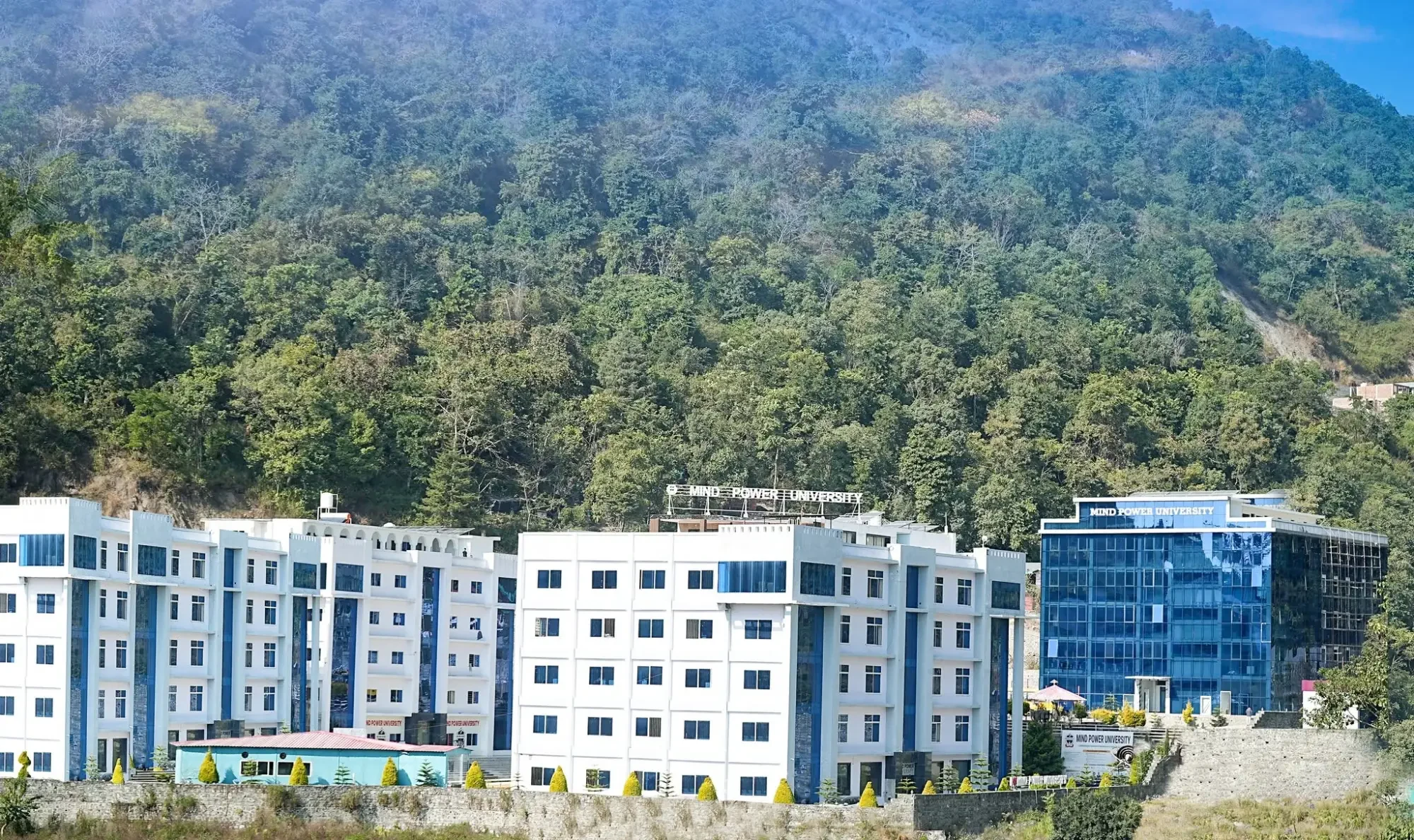 The campus
The Mind Power University campus at Bhimtal, below the Kumaon hills
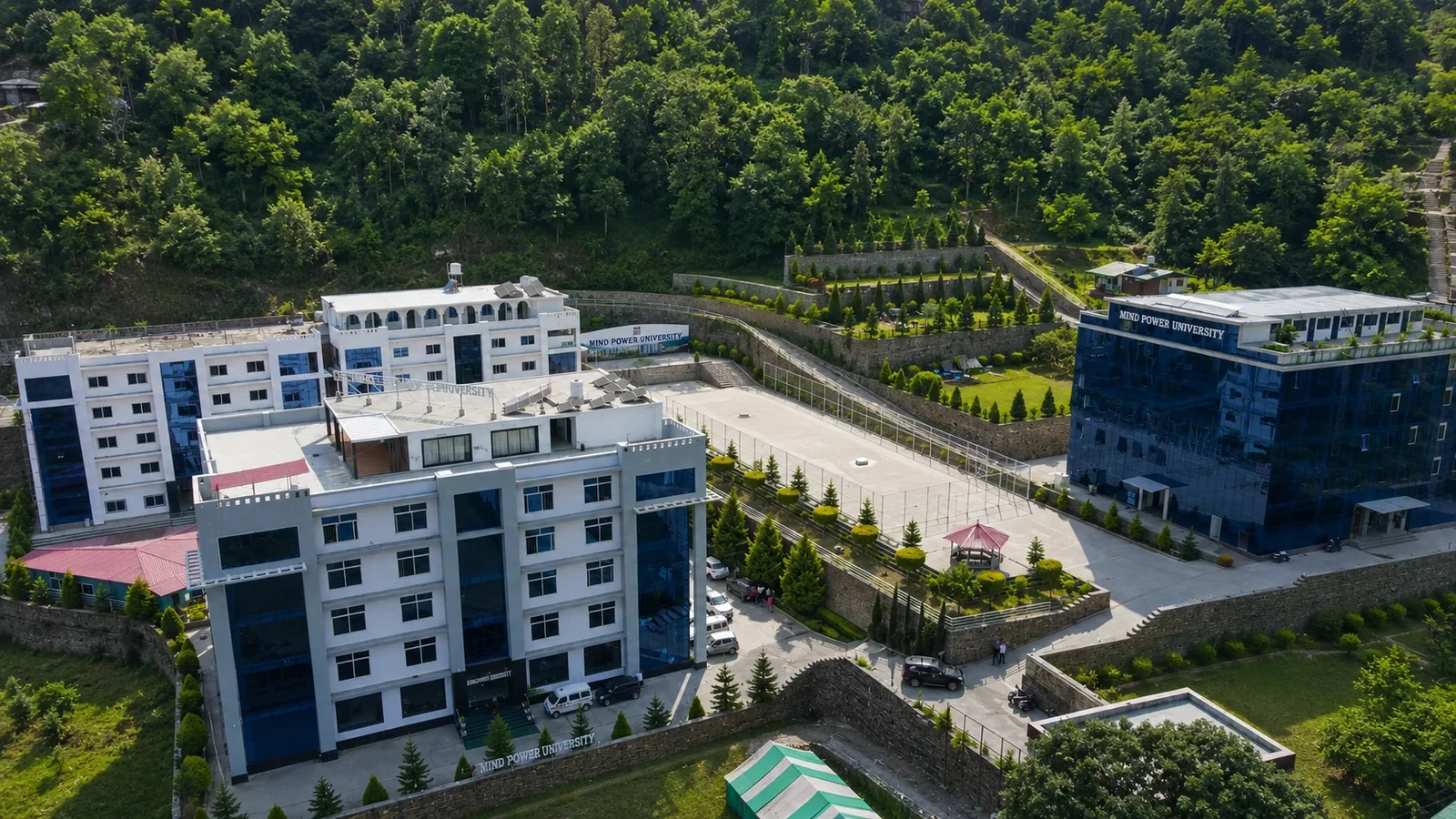 From the air
The campus from the air — the academic blocks and the terraced grounds
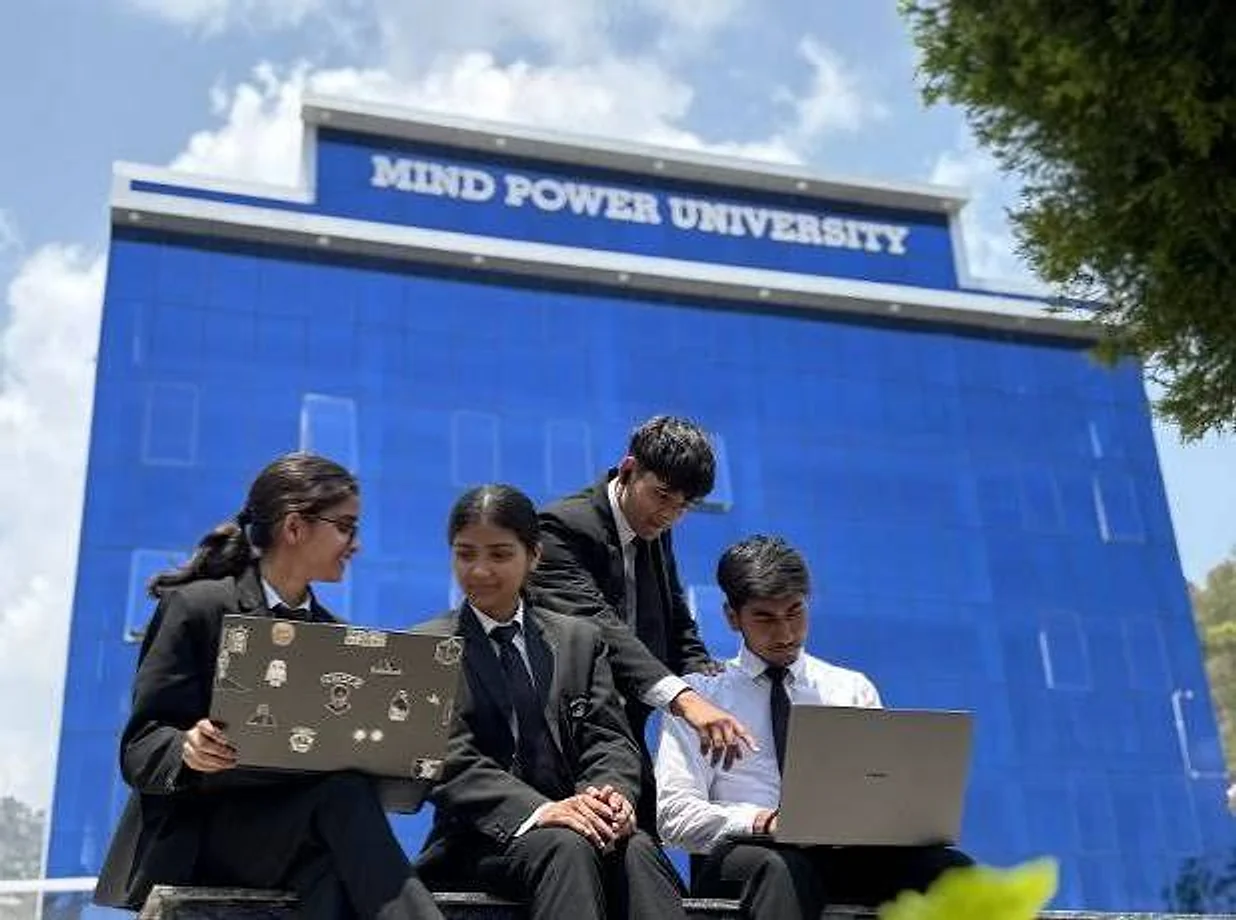 College building
The college building at Mind Power University, Bhimtal, Nainital, with students outside
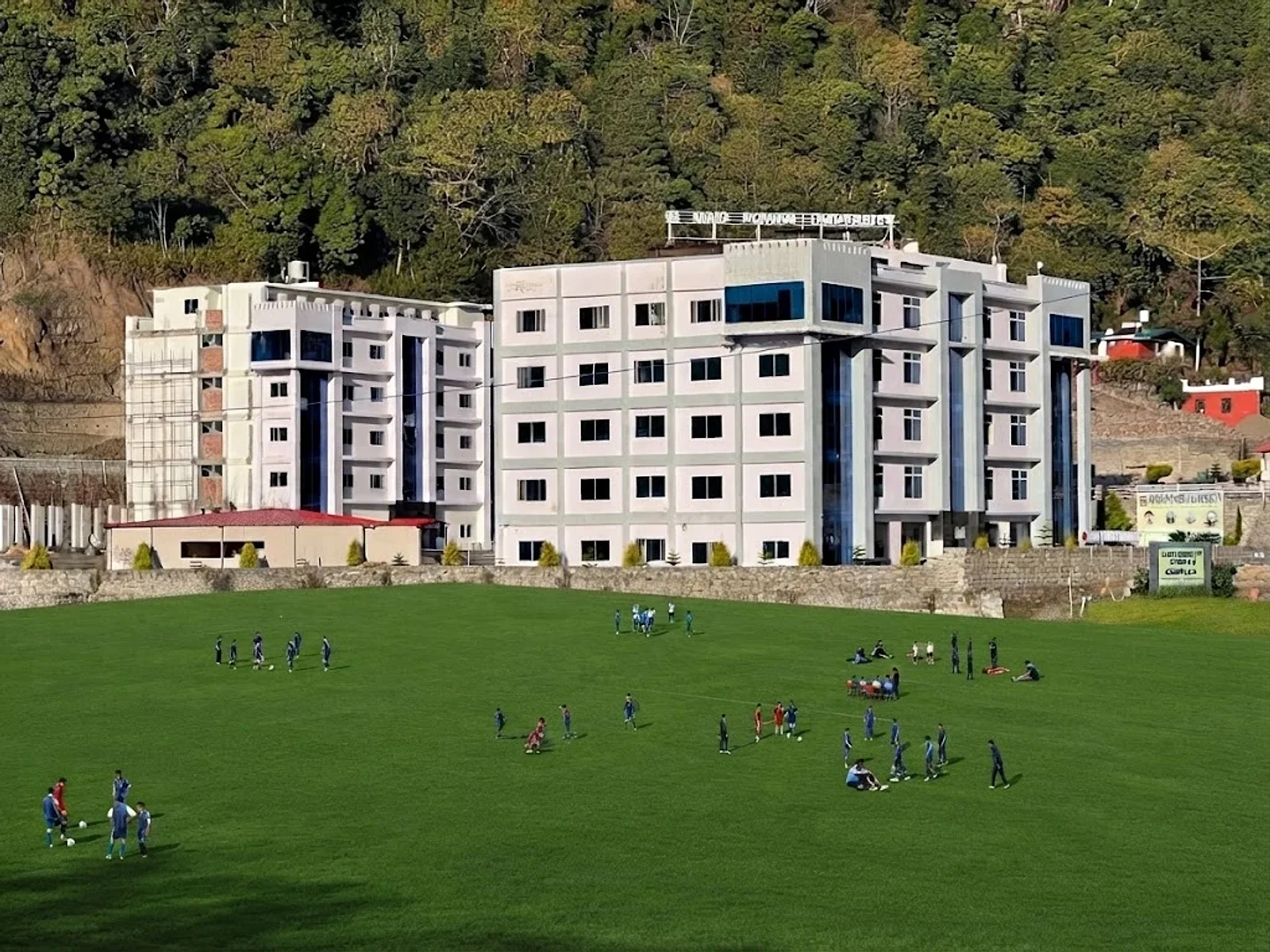 The grounds
The sports field at Mind Power University, Bhimtal, Nainital, with the Kumaon hills behind
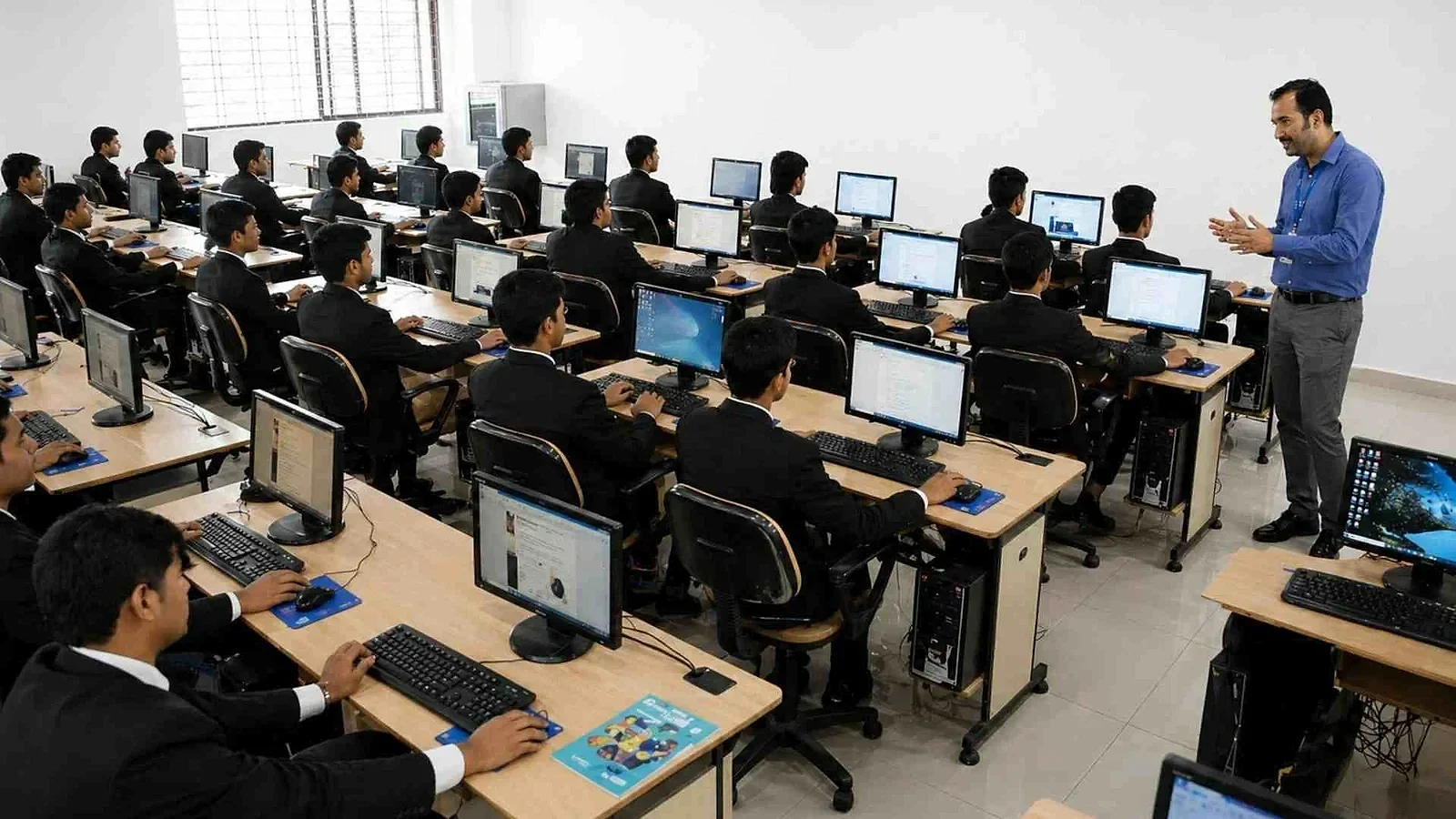 Computer lab
A computer lab at the Sportal IMPACT campus, Mind Power University, Bhimtal, Nainital
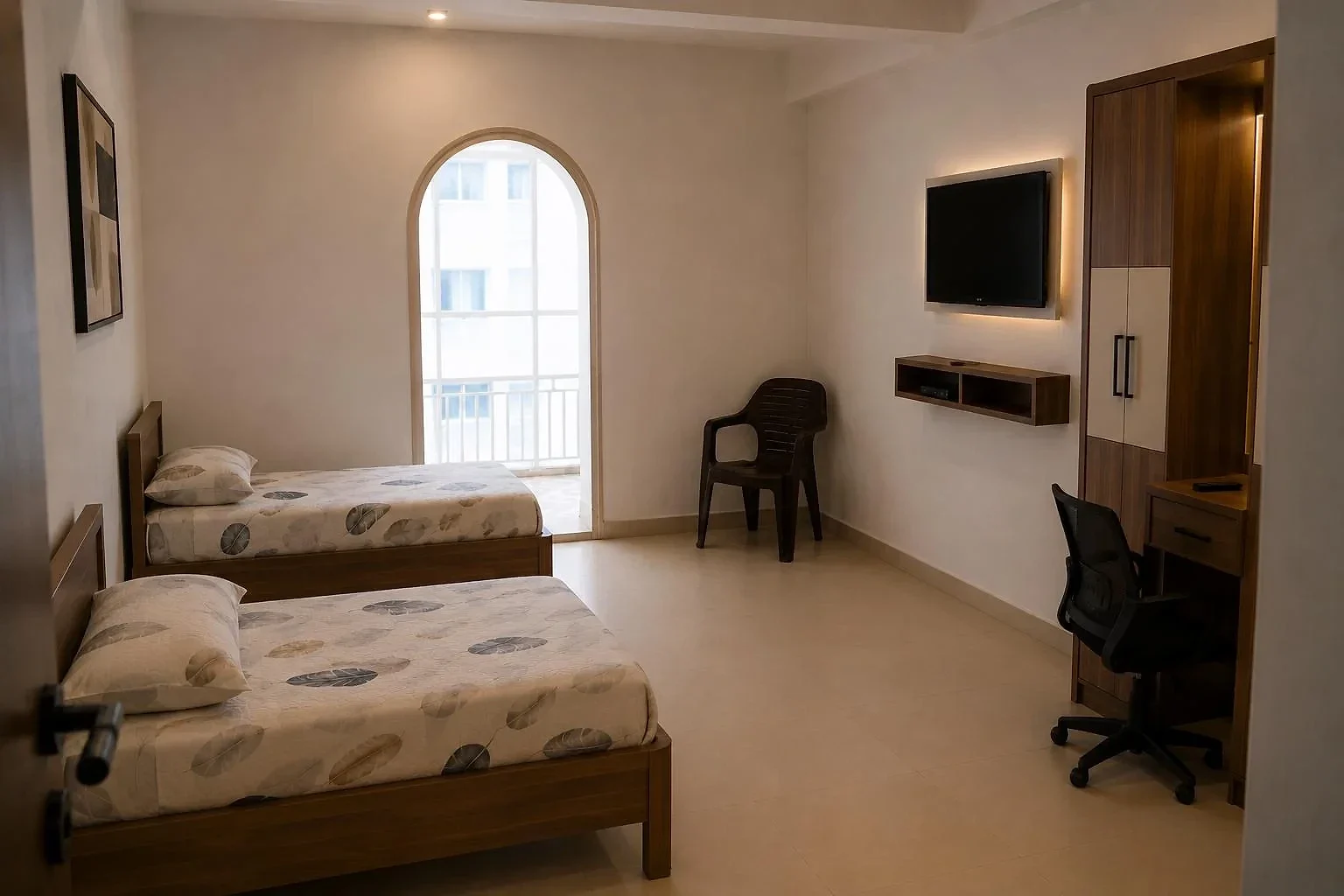 Hostel room
A twin-sharing hostel room at the Mind Power University campus, Bhimtal, Nainital
Get the M.P.E.S. — Master of Physical Education & Sports brochure on WhatsApp
Fee structure, curriculum, intake dates and placement details — sent straight to your phone. No payment required.
- Curriculum + AI modules PDF
- Annual fee + payment options
- Eligibility + admission timeline
Frequently asked questions
What is the full form of MPES?
MPES stands for Master of Physical Education and Sports. It is a 2-year postgraduate degree in physical education, coaching and sport science, with a research dissertation.
What is the M.P.E.S. fee?
₹40,000 per semester — ₹80,000 a year — for the 2027–28 intake. Hostel, food and one-time admission charges are listed separately on the fee-structure page; nothing is quoted on request.
What is the eligibility for the M.P.E.S.?
A bachelor’s degree, typically in physical education or sport (B.P.E.S., B.P.Ed., B.Sc. Physical Education). Mind Power University sets the exact criteria — including whether other graduates with a sports background qualify — and our admissions team confirms them for your degree before you apply.
Is the M.P.E.S. the same as an M.P.Ed.?
No. The M.P.Ed. is a teacher-education degree regulated by the NCTE. The M.P.E.S. is a university master’s in physical education and sports. Both are postgraduate degrees, but if a teaching post asks specifically for an M.P.Ed., check the advertisement before you rely on an M.P.E.S.
Who awards the degree, and is it recognised?
Mind Power University, Bhimtal, Nainital — a UGC-recognised State Private University established in 2024 under Uttarakhand’s private-universities law, which places it within the definition of a University in Section 2(f) of the UGC Act, 1956, and lets it award its own degrees. The degree is full-time and on campus, not distance or online.
What can I do after an M.P.E.S.?
Coaching, strength and conditioning, sport-science and performance-analysis roles, fitness programme leadership, and — with NET or a Ph.D. — college teaching and research. Government posts have their own qualification rules, so always check the specific advertisement.
Can I do a Ph.D. after an M.P.E.S.?
Yes — a master’s degree is the eligibility bar for doctoral study, and the same campus offers a Ph.D. with tracks in Physical Education and in Sports Management. Doctoral admission is governed by UGC regulations and run by the university, so ask admissions for the current notification rather than relying on a general description.
Does the M.P.E.S. help with UGC NET?
It is the qualification that makes you eligible to sit it. UGC NET in Physical Education requires a master’s degree in the subject, which a bachelor’s does not satisfy. The research methods and statistics papers overlap substantially with the NET syllabus, but the programme is not a NET coaching course and we will not describe it as one.
Can I do an M.P.E.S. after a B.A. or B.Sc. in another subject?
That is a question for the university rather than for us. The criteria are set by Mind Power University, and whether a graduate from outside physical education qualifies — and on what conditions — is decided there. Our admissions team confirms it against your specific degree in writing before you apply, which is the only answer worth having.
Is there an entrance exam for the M.P.E.S.?
No. Admission is on your graduation plus a counselling conversation — there is no written entrance test and no CUET requirement. Admissions for the 2027–28 intake are open now with limited seats.
Is the dissertation compulsory?
Yes, and it is the part of the degree that does the most work for you afterwards. It is what distinguishes a master’s from an extended bachelor’s, it is the evidence a Ph.D. supervisor will actually read, and it is the only point in the programme where you own a question end to end.
When does it start?
The first batch starts in Academic Year 2027. Admissions for the 2027–28 session are open now.
Try before you apply
Start with a free course in coaching and performance
Free, self-paced, and each one ends with a certificate you can verify. No fee and no card — the same teaching team writes them.
Related pages
- B.P.E.S. — the undergraduate route The 4-year physical education degree after Class 12 that leads into the M.P.E.S.
- Full fee structure Every programme fee, hostel and one-time charge for the session, in one table.
- Ph.D. — the doctoral route Physical Education and Sports Management tracks, for after the master’s.
- Best Careers After BPEd Where physical education graduates work, and what the roles pay.
Ready to Start Your Sports Career?
Admissions are open for the 2027–28 intake. Apply early — seats are limited.