
Sports Science Courses in India — Every Route, After 12th and After Graduation
Next intake: Academic Year 2027 · limited seatsSports Science Courses in India, Side by Side
| Course | Level and duration | Entry | Best for |
|---|---|---|---|
| B.Sc. in Sports Science | Undergraduate degree, 3–4 years | Class 12, often with science (college rules vary) | The science of performance: physiology, biomechanics, nutrition |
| Bachelor of Physical Education and Sports (B.P.E.S.) | Undergraduate degree, 3–4 years | Class 12, any stream | Coaching and training, with sports science in the core |
| B.Sc. in Sports Analytics | Undergraduate degree, 4 years | Class 12, any stream | Performance data, statistics and modelling |
| B.Sc. in Exercise Science or Sports Nutrition | Undergraduate degree, 3 years | Class 12, usually with science | Fitness, health and diet rather than elite sport |
| Diploma or certificate (strength and conditioning, fitness, sports psychology) | Institute or university credential, 6–12 months | Class 12 or graduation | One applied skill — check who awards it |
| M.Sc. in Sports Science or Exercise Physiology | Postgraduate degree, 2 years | A science, sports science or PE degree | High-performance and research roles |
| Master of Physical Education and Sports (M.P.E.S.) | Postgraduate degree, 2 years | A bachelor’s degree in PE or sport | Training science, coaching and, with NET, college teaching |
| Ph.D. | Doctoral degree, 3 years | Master’s degree | Research, and teaching at university level |
| Our fees (Sportal, 2027–28) | B.P.E.S. ₹60,000 a year | B.Sc. Sports Analytics ₹1,20,000 a year | M.P.E.S. ₹80,000 a year · hostel on the fee-structure page |
Durations and entry rules for courses we do not run are the usual pattern across Indian institutions, not a promise about any one of them. Confirm the details, and the fee, in each institution’s own prospectus for the session you are applying to.
Sports science is the study of how the body performs, adapts and gets injured in sport: exercise physiology, biomechanics, nutrition, psychology and, increasingly, data. In India it is taught under several names. There are B.Sc. and M.Sc. degrees called sports science, physical education degrees with sports science in the core, analytics degrees that cover the data side, and short diplomas in single skills such as strength and conditioning.
Two distinctions matter more than the course name. The first is degree versus credential: a UGC-recognised university degree counts for further study and most employers, while an institute’s certificate may not. The second is what the qualification lets you do. Sports physiotherapy needs a physiotherapy degree, clinical nutrition needs a nutrition qualification, and a government PE teacher post usually needs an NCTE-recognised B.P.Ed. A sports science degree on its own does none of those.
We do not run a B.Sc. in Sports Science, and this page does not pretend otherwise. The table compares every route side by side, including ours on the science side of sport: the B.P.E.S., the B.Sc. in Sports Analytics, the M.P.E.S. and two one-year diplomas, all awarded by Mind Power University, Bhimtal, with their fees published.
How to Choose Between These Courses
Sports science or physical education? Sports science studies the body in performance; physical education trains you to teach and coach it. A B.P.E.S. carries both, which is why it suits students who want to work with athletes rather than in a lab.
Check your Class 12 stream. Many B.Sc. sports science programmes ask for science in Class 12. The B.P.E.S. and our B.Sc. in Sports Analytics take any stream.
Physiotherapy is a different degree. Treating sports injuries as a physiotherapist needs a BPT. A sports science degree prepares you to work alongside a physio, not to replace one.
Ask to see the lab. Physiology and biomechanics are learned on equipment. Ask which instruments students actually use, and how often, before you pay.
Check the award, not the brochure. A degree should name a UGC-recognised university; a short course may be an institute’s own certificate.
Government teaching needs a B.P.Ed. Eligibility for a government PE teacher post depends on the recruitment notification and usually requires an NCTE-recognised B.P.Ed.; neither a sports science degree nor a B.P.E.S. replaces it.
How to Apply — Admission Process
Admission is direct on your Class 12 result — there is no entrance exam. Here is the simple step-by-step process for the 2027–28 intake (limited seats).
Enquire & Get Details
Share your details through the form or on WhatsApp. Our team sends you the prospectus, curriculum and current fee structure.
Free Counselling Call
A counsellor checks your eligibility, answers your questions, and helps you choose the right programme — free and with no obligation.
Submit Your Application
Fill in the application form and share your Class 12 marksheet, a photo ID, and passport-size photographs.
Offer & Seat Confirmation
Once your application is approved you receive an offer letter; confirm your admission to secure one of the limited seats.
Enrol & Begin
Complete enrolment with our UGC-recognised university partner and join orientation to start your degree.
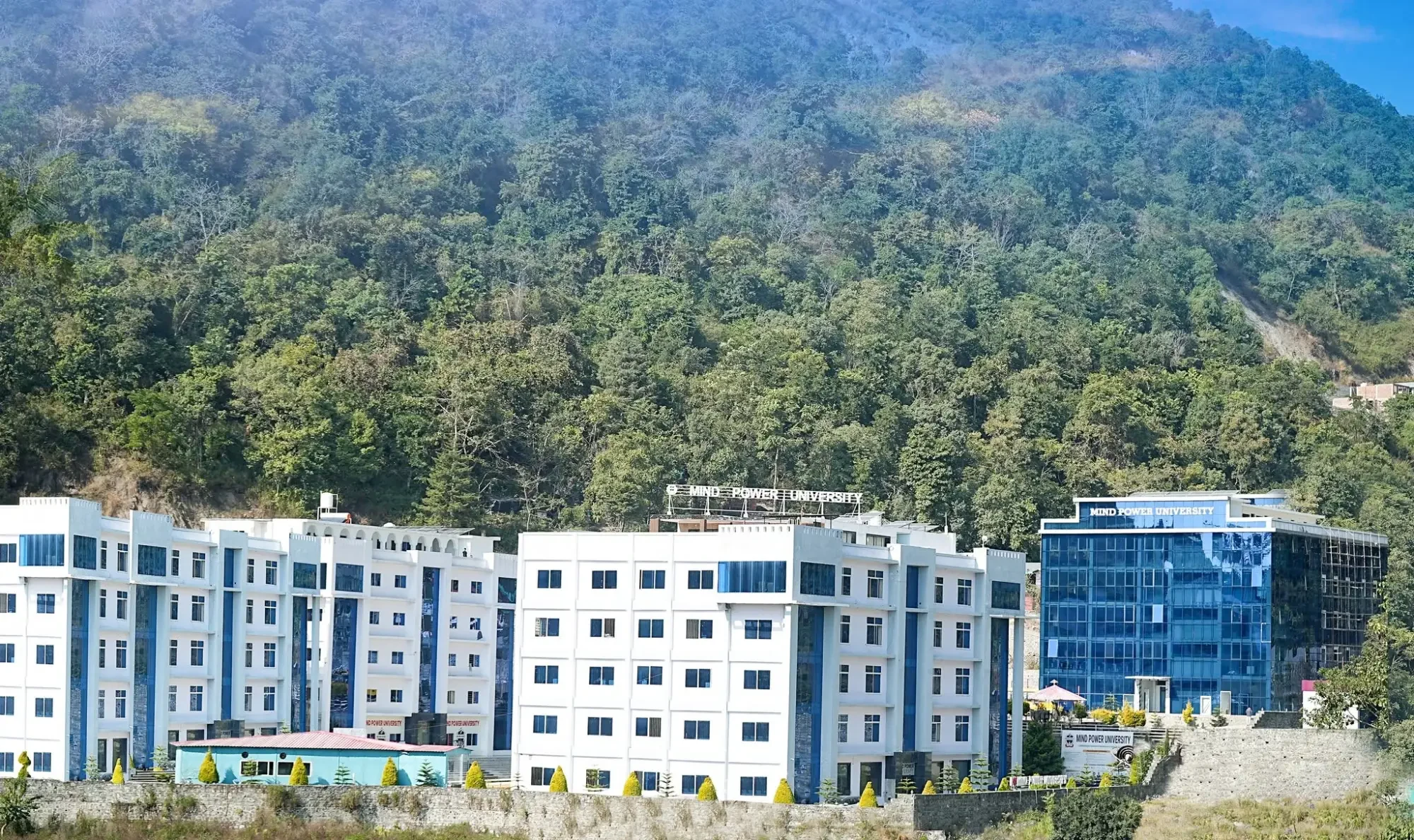
Mind Power University, Bhimtal, Nainital
Taught on the Mind Power University campus at Bhimtal, in the Kumaon hills — the same university that awards the degree. Not a rented building with a distant university’s name on the certificate.
See the campus and the tour →Get the Sports Science Courses in India brochure on WhatsApp
Fee structure, curriculum, intake dates and placement details — sent straight to your phone. No payment required.
- Curriculum + AI modules PDF
- Annual fee + payment options
- Eligibility + admission timeline
Frequently Asked Questions
Which sports science courses can I do in India?
At undergraduate level: a B.Sc. in Sports Science, a B.P.E.S. with sports science in the core, a B.Sc. in Sports Analytics, or a B.Sc. in Exercise Science or Sports Nutrition. After graduation: an M.Sc. in Sports Science or Exercise Physiology, or an M.P.E.S. There are also diplomas in single skills, and a Ph.D. for research. The table on this page compares them.
Which sports science course is best after 12th?
It depends on your stream and what you want to do. With science in Class 12 and an interest in the lab, a B.Sc. in Sports Science. To work directly with athletes as a coach or trainer, a B.P.E.S. With a head for numbers, a B.Sc. in Sports Analytics. All three are degrees; a diploma is a supplement, not a substitute.
What is the eligibility for a sports science course?
For a B.Sc. in Sports Science, Class 12 — often with science, depending on the college. At Sportal, the B.P.E.S. and the B.Sc. in Sports Analytics both need 10+2 any stream, min 45%, with no entrance exam. For an M.Sc. or M.P.E.S., a relevant bachelor’s degree.
What are the fees for sports science courses in India?
They vary widely between government and private institutions, so take each figure from the institution’s own prospectus. Our related programmes: the B.P.E.S. is ₹60,000 a year, the B.Sc. in Sports Analytics ₹1,20,000 a year and the M.P.E.S. ₹80,000 a year, with hostel and one-time charges published separately.
What is the difference between sports science and physical education?
Sports science studies how the body performs, adapts and is injured. Physical education is about teaching and coaching movement and sport. They overlap heavily — a B.P.E.S. includes exercise physiology, biomechanics and training science — but a sports science degree is lab-led, and a physical education degree is field-led.
Can I become a physiotherapist with a sports science degree?
No. Practising as a physiotherapist needs a Bachelor of Physiotherapy (BPT). A sports science graduate works alongside physiotherapists in strength and conditioning, testing and return-to-play support, but does not diagnose or treat injuries.
Does Sportal offer a B.Sc. in Sports Science?
No. Our programmes on the science side of sport are the B.P.E.S. (four years, ₹60,000 a year), the B.Sc. in Sports Analytics (four years, ₹1,20,000 a year), the M.P.E.S. for graduates, and one-year diplomas in sports psychology and, for graduates, sports analytics.
What jobs can I get after a sports science course?
Strength and conditioning, performance analysis, coaching, fitness and wellness, sports technology, and — after a master’s and NET or a Ph.D. — research and university teaching. Nutrition and psychology roles exist too, but clinical practice in either needs its own qualification.
Who awards Sportal’s degrees?
Mind Power University, Bhimtal, Nainital — a UGC-recognised State Private University in Uttarakhand. Teaching happens on the university’s own campus at Bhimtal, which Sportal operates as the IMPACT campus. The degrees are full-time and on campus, not distance or online.
Related pages
- BPES Course — Bachelor of Physical Education and Sports Four years after Class 12, with exercise physiology, biomechanics and training science in the core.
- B.Sc. in Sports Analytics The data side of sports science: four years, any stream.
- Physical education vs sports science The two fields compared — what each studies and where each leads.
- Sports science careers in India The jobs, what they pay and the qualification each one asks for.
- Sports management courses in India, compared If the business of sport interests you more than the body.
Ready to Start Your Sports Career?
Admissions are open for the 2027–28 intake. Apply early — seats are limited.